
-
Traces of Terror: Berlin under the Grip of the Third Reich and the Cold War
- Specifically designed for seminar, study, and school groups
Experience history on site: Understanding political processes through Berlin’s urban landscape
Historical locations between propaganda, symbolism, and today’s remembrance culture
- 2.5-hour walking tour
- Group rate: €299 (up to 10 people)
Each additional person: €11, accompanying staff free of charge
Details:
This tour follows the historical path of the Berlin Wall – with a particular focus on the political developments of the 20th century: from the rise of National Socialism and the founding of the GDR to the Cold War and reunification.
The goal is to explore central sites of German history within their political context: How do authoritarian systems emerge? What roles do architecture, propaganda, and control play? And how does a city remember violence, oppression – and hope?
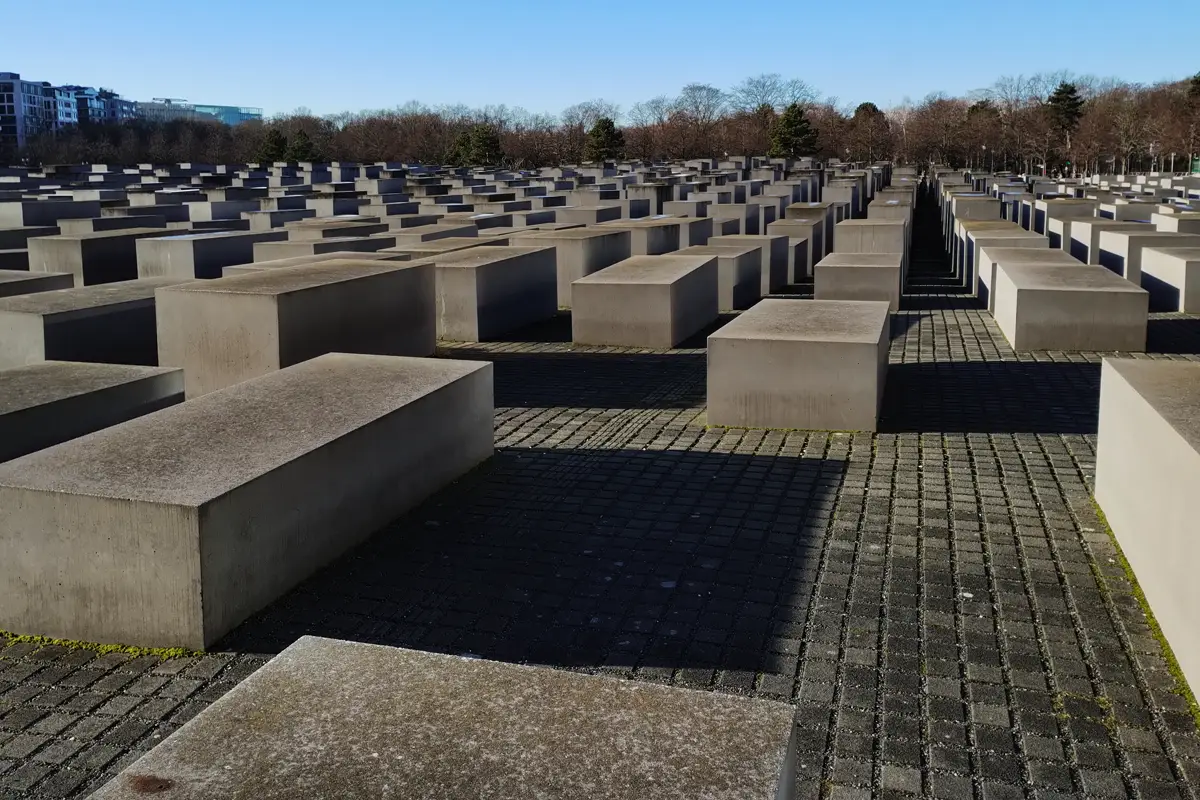
A key focus is public remembrance: Together, we reflect on the function, design, and impact of memorials and monuments in urban space. What do these places do to us? What is remembered – and what is not?
This tour is aimed at groups seeking in-depth historical insight – fact-based, critical, and without oversimplification. It is also suitable for school and university groups, international visitors, and educational institutions.
The goal is to explore central sites of German history within their political context: How do authoritarian systems emerge? What roles do architecture, propaganda, and control play? And how does a city remember violence, oppression – and hope?
A key focus is public remembrance: Together, we reflect on the function, design, and impact of memorials and monuments in urban space. What do these places do to us? What is remembered – and what is not?
This tour is aimed at groups seeking in-depth historical insight – fact-based, critical, and without oversimplification. It is also suitable for school and university groups, international visitors, and educational institutions.
Stops:
- Brandenburg Gate
An architectural landmark and a political symbol, reshaped by changing regimes - Pariser Platz
Representation, remembrance culture, and Stolpersteine (stumbling stones) - The Reichstag building
Empire, democracy, dictatorship – layers of German political history - Soviet War Memorial (Tiergarten)
Cemetery, Stalinist symbolism, and Cold War memory politics - Memorial to the Murdered Jews of Europe
Holocaust memorial, remembrance politics, and public space - Site of the Reich Chancellery & Hitler’s Bunker
From the center of fascist power to a void in the cityscape - 1980s Residential Blocks / Wilhelmstraße
East German urban planning – the so-called "Stasi housing complex" - Memorial to Georg Elser
An assassination attempt as resistance – without hero cult - Berlin Mall / former Wertheim Department Store
Aryanization and the economic dimensions of Nazi persecution - Reich Aviation Ministry
Architectural continuity from the Third Reich to the GDR and beyond - Memorial to the Uprising of June 17, 1953
Popular protest violently suppressed by Soviet tanks - The Berlin Wall / Niederkirchnerstraße
Physical and symbolic division between political systems - Topography of Terror (introduction)
Gestapo, SS, and SD – institutions of Nazi terror and repression - Checkpoint Charlie
Icon of the Cold War – from myth and historical reality to a tourist hotspot


